
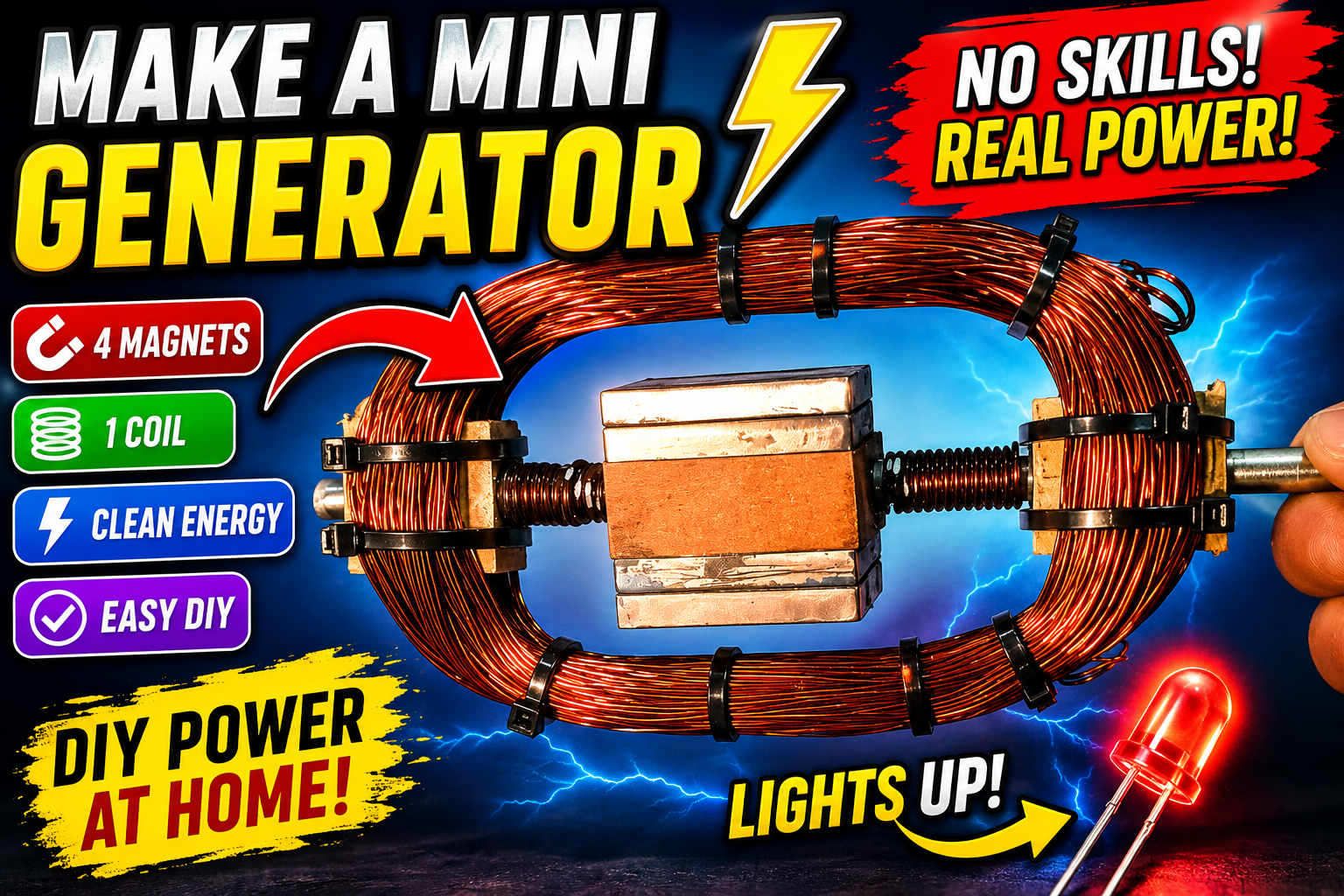
How to Make a Mini Generator at Home Using 4 Magnets and One Coil
Making a mini generator at home is one of the most exciting and educational DIY projects for beginners. A simple generator demonstrates the basic principle of electromagnetic induction, which is the same concept used in large power plants and commercial generators around the world. The good news is that you do not need expensive equipment, advanced tools, or technical expertise to build a working mini generator. With just four magnets, one copper wire coil, and a few basic materials, you can create a small device capable of generating electricity. This project is ideal for students, hobbyists, science enthusiasts, and anyone interested in learning how electricity is produced. By following a straightforward process, you can gain hands-on experience with fundamental electrical concepts while building something useful and entertaining. The project also serves as a practical science experiment that demonstrates how mechanical motion can be transformed into electrical energy through magnetic fields. Whether you are creating a school project, making educational content, or simply exploring electronics as a hobby, this mini generator offers an excellent introduction to the fascinating world of renewable energy and electrical engineering.
Understanding How a Mini Generator Works
Before building the generator, it is important to understand the basic science behind it. A generator works on the principle of electromagnetic induction, discovered by the scientist Michael Faraday. When a magnetic field moves across a coil of wire, electrons inside the wire begin to move, creating an electric current. In this project, four strong magnets are attached to a rotating wheel or disk, while a stationary copper wire coil is positioned close to the magnets. As the magnets spin past the coil, the magnetic field around the coil constantly changes. This changing magnetic field induces a voltage in the wire, causing electricity to flow. The faster the magnets rotate, the greater the change in magnetic flux and the more electricity is generated. Although this homemade generator produces only a small amount of power, it perfectly demonstrates the same operating principle used in wind turbines, hydroelectric generators, and industrial power stations. Understanding this concept helps beginners appreciate how energy can be converted from one form to another and highlights the importance of magnetism in modern electrical systems.
Materials Needed for the Project
One of the best aspects of this DIY mini generator is its simplicity. The project requires only a few affordable materials that are readily available online or in local electronics stores. You will need four neodymium magnets, which provide a strong magnetic field necessary for efficient power generation. A single copper wire coil is required, preferably wound with enamel-coated magnet wire. The coil can be homemade by wrapping several hundred turns of copper wire around a cylindrical object. Additional materials include a small wooden or plastic base, a rotating disk or wheel, a shaft for rotation, adhesive glue, connecting wires, and an LED bulb for testing the generated electricity. Some builders also use a small hand crank to rotate the disk manually, while others attach a DC motor shaft or pulley system to increase rotational speed. Safety glasses and basic hand tools such as pliers, wire cutters, and a hot glue gun may also be helpful during assembly. The total cost of the project is generally very low, making it accessible to students and beginners who want to explore science and electronics without investing in expensive equipment. Despite its simplicity, the completed generator can effectively demonstrate real electrical generation principles.
Step-by-Step Assembly Process
The construction process begins by preparing the rotating magnet assembly. Attach the four magnets evenly around the edge of a circular disk, ensuring that alternating magnetic poles face outward. Proper spacing is important because it helps create consistent magnetic field changes as the disk rotates. Next, mount the disk securely on a shaft so it can spin freely with minimal friction. The copper wire coil should then be positioned close to the path of the magnets without actually touching them. A gap of a few millimeters is usually sufficient for effective magnetic coupling. Secure the coil firmly to the base to prevent movement during operation. Once the mechanical components are installed, connect wires from the coil to an LED bulb or a multimeter. Carefully scrape the enamel coating from the wire ends to ensure proper electrical contact. After assembly is complete, rotate the disk manually using a crank or by spinning it with your hand. As the magnets pass by the coil, electricity will be generated and the LED may begin to glow. Increasing the rotational speed often results in brighter illumination because more voltage is induced in the coil. This simple setup allows beginners to witness electricity generation firsthand using only four magnets and a single coil.
Testing, Improving, and Troubleshooting the Generator
After assembling the mini generator, testing is essential to verify proper operation. Start by spinning the magnet disk at a moderate speed while observing the LED or measuring voltage with a multimeter. If little or no output is detected, several factors should be checked. First, confirm that the magnets are positioned correctly and pass close enough to the coil. The magnetic field weakens rapidly with distance, so reducing the gap can significantly improve performance. Second, verify that the wire ends are properly stripped and connected. Poor electrical connections are a common cause of low output. Third, examine the coil itself. Increasing the number of wire turns often produces a higher voltage because more wire interacts with the changing magnetic field. Stronger magnets can also improve generation efficiency. Another useful modification involves increasing rotational speed through gears, pulleys, or a hand crank mechanism. Builders who wish to power larger LEDs or small electronic devices may experiment with additional coils or more powerful magnet arrangements. Through testing and refinement, users gain valuable insight into how generator performance depends on magnetic strength, coil design, and rotational speed. These experiments transform the project into a deeper learning experience that combines physics, engineering, and practical problem-solving.
Educational Benefits and Real-World Applications
Building a mini generator using four magnets and one coil offers far more than just a fun DIY activity. It provides an engaging introduction to fundamental scientific principles including magnetism, electricity, energy conversion, and engineering design. Students can observe how mechanical motion is transformed into electrical energy, making abstract classroom concepts easier to understand. The project encourages hands-on experimentation and critical thinking as builders test different magnet arrangements, coil sizes, and rotational speeds. Teachers often use similar demonstrations in science classes because they effectively illustrate electromagnetic induction in a visual and memorable way. Beyond education, the project also helps learners appreciate the technologies that power modern society. Wind turbines, hydroelectric stations, bicycle dynamos, and industrial generators all rely on the same fundamental principle demonstrated by this simple device. By constructing a working generator at home, beginners develop confidence in their ability to understand and build electronic systems. The project serves as a foundation for more advanced DIY electronics and renewable energy experiments in the future. Most importantly, it proves that complex scientific concepts can be explored using simple materials and a willingness to learn, making science accessible and enjoyable for people of all ages.
Conclusion
Building a mini generator at home using just 4 magnets and 1 copper coil is a simple yet powerful way to learn how electricity is generated. This beginner-friendly project demonstrates the real science of electromagnetic induction, showing how mechanical motion can be converted into electrical energy without requiring advanced skills or expensive tools. By assembling a few low-cost components and following a straightforward process, anyone can create a working generator and gain hands-on experience with the principles that power modern electrical systems.
Whether you're a student completing a science project, a DIY enthusiast exploring electronics, or simply curious about how generators work, this experiment offers both educational value and practical experience. As you test different speeds, magnet positions, and coil designs, you'll develop a deeper understanding of energy conversion and electrical engineering. Most importantly, this project proves that learning science can be fun, affordable, and accessible to everyone. Keep experimenting, keep building, and use this mini generator as the first step toward more advanced DIY energy and electronics projects. ⚡🔋🔧
Frequently Asked Questions (FAQs) About Making a Mini Generator at Home
| # | Question | Answer |
|---|---|---|
| 1 | What is a mini generator? | A mini generator is a small device that converts mechanical motion into electrical energy using magnets and a coil of wire. |
| 2 | How does a mini generator produce electricity? | It works through electromagnetic induction. When magnets move past a copper coil, a changing magnetic field generates an electric current. |
| 3 | Can I make a generator with only 4 magnets and 1 coil? | Yes. Four strong magnets and one properly wound copper coil are enough to create a simple working generator. |
| 4 | What type of magnets work best? | Neodymium magnets are recommended because they are much stronger than standard ferrite magnets and produce better results. |
| 5 | How many turns should the coil have? | Generally, 300–1000 turns of copper wire can produce a noticeable voltage, depending on the magnet strength and rotation speed. |
| 6 | What wire should I use for the coil? | Enamel-coated copper magnet wire is the best choice because it allows many turns to be wound without short circuits. |
| 7 | Can the generator light an LED? | Yes. If the magnets are strong and the rotor spins fast enough, the generator can power a small LED bulb. |
| 8 | Why isn't my generator producing electricity? | Common causes include weak magnets, poor wire connections, too much distance between the magnets and coil, or insufficient rotation speed. |
| 9 | Does the direction of magnet placement matter? | Yes. Alternating the north and south poles around the rotor helps create stronger changes in the magnetic field and improves output. |
| 10 | How can I increase the power output? | Use stronger magnets, increase the number of coil turns, reduce the gap between magnets and coil, or spin the rotor faster. |
| 11 | Is this project safe for children? | Yes, with adult supervision. Care should be taken when handling strong magnets and sharp tools. |
| 12 | Can I charge a phone with this mini generator? | A basic 4-magnet, 1-coil generator usually does not produce enough stable power to charge a phone directly. |
| 13 | What is electromagnetic induction? | Electromagnetic induction is the process by which a changing magnetic field creates an electric current in a conductor. |
| 14 | What are the educational benefits of this project? | It teaches physics, electricity, magnetism, energy conversion, engineering principles, and hands-on problem-solving skills. |
| 15 | What real-world devices use the same principle? | Wind turbines, hydroelectric generators, bicycle dynamos, power plants, and industrial generators all use electromagnetic induction to generate electricity. |
Discussion
hello very nice post with detailed info