
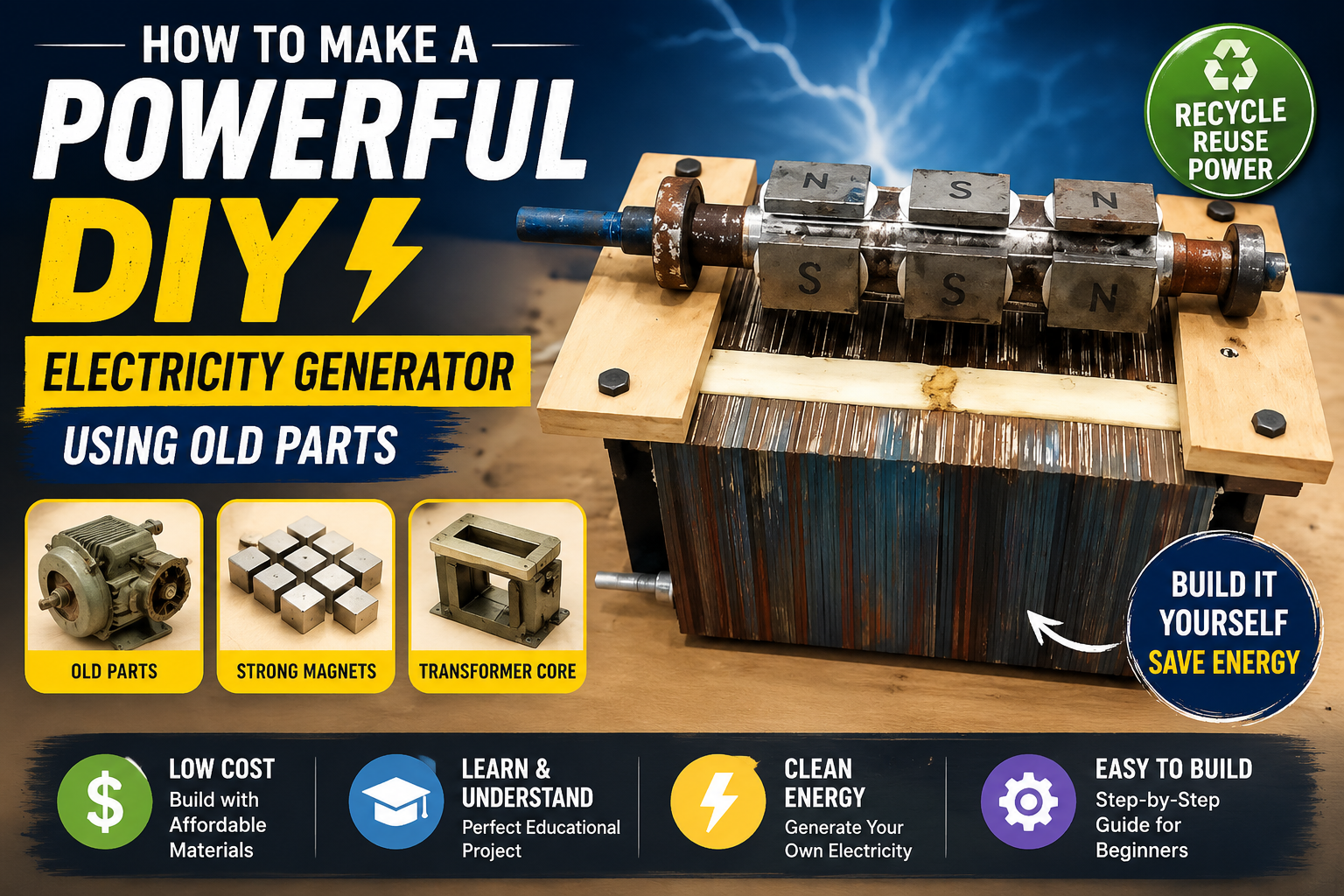
Introduction to DIY Electricity Generators and Basic Working Principles
Electricity generators are machines that convert mechanical energy into electrical energy. In simple terms, when a part of the generator spins, it creates electricity that can power lights, charge batteries, or run small devices. Large power plants use the same principle, but a DIY generator allows hobbyists and beginners to produce electricity on a smaller scale using affordable or recycled materials. By using old motors, magnets, copper wire, and salvaged machine parts, anyone with basic tools can build a functional homemade generator.
The working principle behind a generator is called electromagnetic induction. This scientific concept was discovered by Michael Faraday. Electromagnetic induction happens when a magnetic field moves around a coil of copper wire. As the magnet rotates, electrons inside the wire begin to move, creating an electric current. The faster the magnet spins, the more electricity the generator can produce. This is why most generators use rotating parts powered by hand cranks, bicycles, wind turbines, or small engines.
There are two main types of generators: AC (Alternating Current) generators and DC (Direct Current) generators. AC generators produce electricity that changes direction repeatedly and is commonly used in homes and large appliances. DC generators produce electricity that flows in one direction and are often used for charging batteries, LEDs, and small electronic devices. For beginners, DC generators are usually better for DIY projects because they are simpler to build and safer for low-voltage applications. Old DC motors from treadmills, printers, fans, or bicycles can easily be converted into small generators.
One major advantage of building a homemade generator is cost savings. Instead of buying expensive equipment, old and discarded parts can be reused to create a powerful machine. Recycling materials also reduces electronic waste and helps protect the environment. DIY generator projects are excellent for learning basic engineering, electronics, and renewable energy concepts. In emergency situations, a homemade generator can even provide backup electricity for lights, phones, radios, and other small devices.
Safety is extremely important when working with generators. Rotating blades, belts, and pulleys can cause injuries if handled carelessly. Electrical wires may also produce sparks or overheating if connected incorrectly. Always wear gloves and safety glasses while building the generator. Keep loose clothing away from spinning parts and never touch exposed wires when the generator is running. Using proper insulation, switches, and fuses can help prevent short circuits and electrical accidents.
This DIY project focuses on creating a small but powerful electricity generator using recycled materials. Depending on the motor type, magnet strength, and spinning speed, the generator may produce enough electricity to power LED lights, charge batteries, or run small electronic devices. The project is inexpensive, educational, and a practical introduction to renewable energy technology.
Collecting Old Parts and Preparing Materials for the Generator
Building a powerful DIY electricity generator does not require expensive equipment. Many of the necessary components can be collected from old machines, broken appliances, and discarded electronics. Reusing these materials not only reduces costs but also helps recycle electronic waste into something useful and practical. With careful selection and preparation, salvaged parts can perform almost as effectively as new ones.
One of the best places to find reusable generator parts is local junkyards and scrap markets. Old washing machines, ceiling fans, treadmills, bicycles, printers, and car alternators often contain valuable motors, copper wiring, and metal components. Repair shops and recycling centers may also sell damaged appliances at very low prices. Many people throw away electronics that still contain working internal parts, making them excellent sources for DIY projects. Even broken power tools and computer cooling fans can provide useful materials for small generators.
Choosing the correct motor or alternator is one of the most important steps in the project. DC motors are commonly used in homemade generators because they are simple to wire and produce direct current suitable for charging batteries or powering LEDs. Treadmill motors are especially popular because they can generate higher voltage at lower speeds. Bicycle dynamos are another affordable option for smaller projects, while car alternators can produce more power for advanced setups. Before selecting a motor, it is important to check its voltage rating, size, and condition to ensure it can handle the intended workload.
Magnets and copper wire are essential for generating electricity through electromagnetic induction. Strong magnets can often be removed from old speakers, microwave motors, or hard drives. Copper wire can be salvaged from transformers, old motors, extension cords, and damaged electrical equipment. Batteries, switches, fuses, and connectors may also be reused from old electronic devices. Metal frames from bicycles, shelves, or scrap steel can be repurposed to build a sturdy base for the generator. Reusing these materials significantly lowers construction costs while improving sustainability.
Several basic tools are required to prepare and assemble the generator. Common tools include screwdrivers, pliers, wire cutters, drills, wrenches, soldering irons, and a hacksaw. A multimeter is especially important because it measures voltage, resistance, and current during testing. Electrical tape, glue, nuts, bolts, and zip ties are also useful for securing components safely.
Before assembly, all salvaged parts should be cleaned and inspected carefully. Dust, rust, and grease can reduce performance or damage electrical connections. Wires should be checked for broken insulation, while motors should spin freely without unusual noise or resistance. Magnets should still have strong magnetic force, and batteries should be tested to ensure they hold a charge. Testing parts before construction helps avoid future problems and improves the reliability of the generator.
To keep the project budget-friendly, builders should prioritize recycled materials and avoid buying unnecessary components. Comparing prices at scrap shops, reusing household items, and repairing old parts can save a significant amount of money. With patience and creativity, a highly effective electricity generator can be built at a very low cost.
Step-by-Step Process to Build the DIY Electricity Generator
After collecting all the necessary materials, the next step is assembling the DIY electricity generator. Proper construction is important because a stable and well-connected generator produces more electricity and operates safely. Careful planning during assembly also reduces the chances of mechanical or electrical failure.
The first step is designing and building a strong base frame. The frame supports the motor, rotating system, and electrical components while keeping the generator stable during operation. Wood, steel bars, aluminum sheets, or old bicycle frames can be used to create the base. The platform should be heavy enough to prevent shaking or movement when the generator spins at high speed. Mark the positions of the motor, pulleys, and battery before drilling holes or attaching parts. A well-balanced frame improves efficiency and reduces vibration.
Once the frame is complete, the motor or alternator must be mounted securely. Position the motor in a way that allows smooth rotation and easy access to wiring connections. Use bolts, clamps, or metal brackets to hold it firmly in place. If the motor shifts while operating, it may damage the wiring or reduce electricity production. Check that the shaft spins freely without touching other components. For larger generators, rubber pads can be added under the motor to absorb vibration and noise.
The next step involves installing the rotation system. A generator needs mechanical movement to produce electricity, so pulleys, gears, belts, or hand-crank systems are commonly used. A bicycle chain mechanism is a popular low-cost solution because it transfers rotational energy efficiently. Builders can also attach blades for wind power or pedals for human-powered electricity generation. The goal is to rotate the motor shaft smoothly and continuously. Larger pulleys increase torque, while smaller pulleys increase speed. Proper belt tension is important because loose belts may slip and reduce power output.
After completing the mechanical setup, the electrical wiring process begins. Connect the output terminals of the motor or alternator using insulated copper wires. Positive and negative terminals should be identified correctly, especially for DC generators. Installing a switch and fuse between the generator and output devices increases safety by preventing short circuits and overloads. Electrical tape or heat-shrink tubing should cover all exposed wire connections to avoid electric shocks or accidental contact.
The generated electricity can then be connected to useful devices such as LEDs, light bulbs, rechargeable batteries, or USB charging modules. LEDs are ideal for testing because they require low power and immediately show whether electricity is being produced. USB charging ports can also be added to charge mobile phones or small electronic devices. If batteries are used, a charge controller may help regulate voltage and prevent overcharging.
Testing is a critical part of the project. A multimeter should be used to measure voltage, current, and resistance. Spin the generator manually or with a mechanical system and observe the voltage reading. If the voltage is too low, increasing the rotation speed or improving magnet strength may help. If no electricity is produced, inspect all wire connections carefully.
Common mistakes include loose wiring, incorrect polarity, poor belt alignment, and unstable mounting. Overheating may also occur if the generator spins too fast or experiences excessive friction. Regular inspection and adjustments help improve performance and ensure the generator operates safely and efficiently.
Increasing Generator Efficiency and Power Output
After building a basic DIY electricity generator, the next goal is improving its efficiency and increasing the amount of electricity it can produce. A generator’s performance depends on factors such as rotational speed, magnetic strength, wiring quality, and mechanical stability. By making several smart modifications, a homemade generator can become more powerful and reliable for everyday use.
One of the most effective ways to increase electricity production is by increasing the rotational speed of the motor or alternator. According to the principle of electromagnetic induction, faster movement between magnets and copper coils generates a stronger electric current. This can be achieved by using larger driving wheels connected to smaller pulleys, allowing the motor shaft to spin at higher speeds. Hand cranks, pedal systems, and belt-driven mechanisms can also improve rotation efficiency. However, the speed should remain within safe limits to prevent damage to the motor or excessive heat buildup.
Magnet strength also plays a major role in generator performance. Stronger magnets create a more powerful magnetic field, which increases voltage output. Neodymium magnets are especially effective because they are much stronger than standard ferrite magnets commonly found in household appliances. Arranging magnets evenly around the rotating shaft improves balance and electrical consistency. In addition, using thicker or better-organized copper coils can improve conductivity and reduce energy loss. Increasing the number of coil turns often results in higher voltage production, although it may slightly reduce rotational speed if not balanced properly.
Mechanical improvements can also make the generator operate more smoothly. Flywheels help maintain continuous rotation by storing kinetic energy and reducing sudden speed changes. Belt-driven systems provide smoother power transfer than direct contact systems and reduce stress on moving parts. Bicycle-based mechanisms are especially useful because they allow continuous human-powered rotation with less effort. These additions improve stability and help maintain a steady electricity supply.
Rechargeable batteries can be integrated into the system to store generated electricity for later use. Connecting a battery allows excess power to be saved instead of wasted. Charge controllers are highly recommended because they regulate voltage and protect batteries from overcharging or deep discharge. This setup is especially useful for powering LED lights, USB charging ports, radios, or emergency backup systems during power outages.
A homemade generator can also be converted into a renewable energy system. Small wind turbine blades can be attached to create a wind-powered generator, while pedals can turn it into a bicycle-powered electricity source. These environmentally friendly systems reduce dependence on fuel and make the generator more practical for long-term use.
Preventing energy loss is equally important for maximizing efficiency. Friction between moving parts should be minimized using proper lubrication and high-quality bearings. Loose belts, poor wiring connections, and unstable mounting can reduce power output significantly. Overheating can damage coils and magnets, so ventilation and controlled operating speeds are essential. Stable voltage output can also be improved by using voltage regulators and properly insulated wiring.
Finally, energy-saving practices help maximize generator performance. Using low-power devices such as LEDs, rechargeable batteries, and efficient USB chargers reduces unnecessary energy consumption. Regular maintenance and careful adjustments ensure that the generator continues operating efficiently while producing reliable electricity for various small-scale applications.
Practical Uses, Maintenance, and Future Upgrades
A DIY electricity generator built from old and recycled parts can serve many practical purposes in daily life. One of its most valuable uses is providing emergency backup power during electricity outages. In areas where power interruptions are common, a homemade generator can keep essential devices running for short periods. Even a small generator can produce enough electricity to power LED lights, charge mobile phones, operate radios, or run small fans. This makes it a useful and affordable solution for emergencies, outdoor activities, workshops, and educational experiments.
Small appliances are ideal for homemade generators because they consume less energy. LED bulbs require very little electricity and provide bright lighting efficiently. USB charging ports can be added to charge phones, tablets, and rechargeable batteries. Portable radios and low-power DC fans can also operate successfully with a properly built generator system. Although small DIY generators cannot usually power large household appliances, they are excellent for learning basic renewable energy concepts and supporting low-energy devices.
Routine maintenance is essential for long-lasting performance and safe operation. Moving parts such as bearings, gears, belts, and pulleys should be inspected regularly for wear and friction. Applying lubrication helps reduce resistance and prevents overheating. Electrical wires must remain properly insulated to avoid short circuits and accidental shocks. Dust, rust, and moisture should be cleaned from the generator because they may reduce efficiency or damage internal components. Batteries should also be monitored to ensure they charge correctly and do not leak or overheat.
Beginners often make common mistakes that reduce performance or damage the generator. Loose wiring connections can interrupt electricity flow, while incorrect polarity may damage batteries or electronic devices. Misaligned pulleys and belts may slip during operation and reduce rotational efficiency. Overloading the generator with devices that require too much power can also overheat the motor or burn the coils. Careful testing with a multimeter and gradual adjustments help prevent these problems.
As experience grows, the generator can be upgraded to produce higher voltage and support larger electrical loads. Builders may install stronger magnets, larger coils, better bearings, or more efficient motors to improve performance. Adding solar panels, wind turbine blades, or advanced battery storage systems can transform the project into a more powerful renewable energy setup. Voltage regulators and inverters can also be added to provide more stable electricity for additional devices.
Another major advantage of DIY generator projects is their environmental benefit. Reusing old motors, wires, and metal parts reduces electronic waste and encourages recycling. Instead of throwing away broken appliances, valuable components can be transformed into useful energy systems. This supports sustainable living while teaching practical engineering and problem-solving skills.
Overall, building a homemade electricity generator is both educational and rewarding. It allows people to experiment with science, mechanics, and renewable energy using affordable materials. With creativity, maintenance, and continuous improvement, a simple DIY generator can become a reliable source of small-scale sustainable power.
Conclusion
Building a powerful DIY electricity generator using old and recycled parts is an excellent way to learn about renewable energy, electronics, and mechanical engineering while saving money. By understanding the basic principles of electromagnetic induction and carefully selecting reusable components such as motors, magnets, copper wire, and batteries, it is possible to create a functional generator capable of powering small devices and providing emergency backup electricity.
Throughout the project, proper planning, safe wiring, and regular testing are essential for achieving reliable performance. Improving rotational speed, using stronger magnets, and reducing energy loss can significantly increase the generator’s efficiency and power output. In addition, integrating rechargeable batteries, wind systems, or pedal-powered mechanisms can transform a simple homemade generator into a more advanced and sustainable energy solution.
One of the greatest advantages of this project is its environmental impact. Reusing discarded electronics and scrap materials helps reduce electronic waste while encouraging creativity and innovation. Instead of relying entirely on expensive commercial equipment, DIY energy projects allow individuals to experiment, develop technical skills, and better understand how electricity is produced and used in everyday life.
Although a homemade generator may not replace large commercial power systems, it is highly valuable for educational purposes, emergency preparedness, and small-scale energy needs. With patience, regular maintenance, and continuous upgrades, a DIY electricity generator can become a reliable and practical source of renewable power. Most importantly, the project demonstrates how old materials and simple engineering ideas can be transformed into something useful, sustainable, and inspiring for future energy solutions.
Discussion
No comments yet. Be the first to join the conversation!