
DIY Generator Project: Generate Electricity at Home with Simple Materials
Introduction to DIY Electricity Generation
Generating electricity at home is one of the most fascinating projects for anyone interested in science, engineering, or renewable energy. A DIY generator project allows you to understand the basic principles of electricity production while creating a practical device that can power small electronic equipment. Unlike complex industrial generators, a homemade generator can be built using simple materials that are often available in local hardware stores or recycled from old appliances.
The concept behind a generator is surprisingly simple. Electricity is produced when a conductor, such as copper wire, moves through a magnetic field. This process, known as electromagnetic induction, was discovered by Michael Faraday in the 19th century and remains the foundation of modern power generation. Every large power plant, whether powered by water, wind, steam, or nuclear energy, relies on this same principle.
A DIY generator project is an excellent educational activity for students, hobbyists, and makers. It provides hands-on experience with magnets, copper wire, rotating machinery, and electrical circuits. Building your own generator also helps develop practical skills such as measuring, assembling mechanical parts, troubleshooting, and understanding electrical safety.
Many people are surprised to learn that electricity can be generated using materials as simple as copper wire, permanent magnets, a rotating shaft, and a frame. While a homemade generator will not replace the electrical grid, it can demonstrate how energy conversion works and may produce enough power to illuminate LEDs, charge batteries, or operate small devices.
One of the biggest advantages of a DIY generator is customization. Builders can experiment with different numbers of magnets, coil designs, rotational speeds, and output voltages. Each modification provides valuable insights into generator performance and efficiency. This experimentation makes the project both educational and enjoyable.
In this article, we will explore the materials, construction process, operating principles, testing procedures, and safety considerations involved in creating a simple electricity generator at home. By following these guidelines, you can gain a deeper understanding of energy production while building a functional engineering project.
Understanding How a Generator Produces Electricity
Before beginning construction, it is important to understand the scientific principle behind electricity generation. Generators convert mechanical energy into electrical energy through electromagnetic induction. When a magnetic field moves relative to a conductor, an electrical current is induced within the conductor.
The key components involved in this process are magnets and copper wire coils. Permanent magnets create a magnetic field, while the coils provide a pathway for induced current. As the magnets move past the coils, the changing magnetic field causes electrons within the wire to move, creating electrical voltage.
The strength of the generated electricity depends on several factors. Stronger magnets create a more powerful magnetic field, resulting in higher voltage output. Similarly, increasing the number of turns in the copper coil increases the amount of electricity produced. Faster rotation speeds also contribute to greater voltage generation.
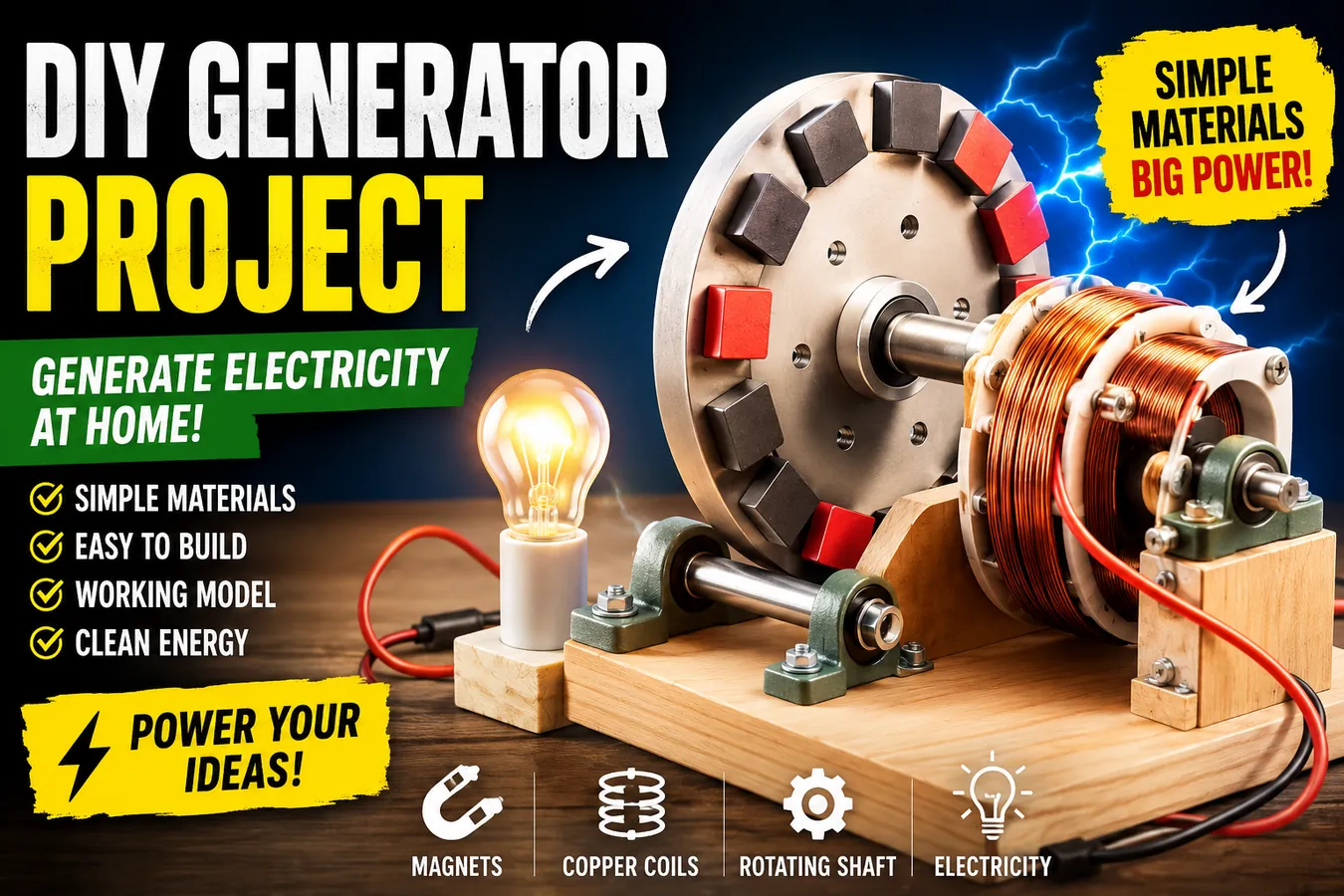
In a typical DIY generator, magnets are attached to a rotating disc or flywheel. Copper coils are mounted nearby on a stationary frame. As the rotor spins, each magnet passes the coils repeatedly, producing alternating current (AC). The continuous movement creates a steady electrical output that can be measured using a voltmeter.
The relationship between speed and voltage is particularly important. A generator spinning slowly may only produce a few volts, while the same generator operating at higher speed can generate significantly more electricity. This is why wind turbines and hydroelectric generators are designed to maintain consistent rotational speed.
Understanding these principles helps builders make informed design decisions. Whether constructing a small educational model or a larger experimental generator, the same laws of physics apply. The goal is to maximize the interaction between magnetic fields and copper windings while minimizing mechanical losses.
Materials Required for a Simple DIY Generator
One of the most attractive aspects of a homemade generator project is the availability of materials. Many components can be obtained from recycled electronics, old motors, or inexpensive hardware supplies. This makes the project accessible to beginners and experienced hobbyists alike.
The most important materials are permanent magnets and copper wire. Neodymium magnets are particularly popular because they provide a strong magnetic field despite their compact size. Copper wire, preferably enamel-coated magnet wire, is used to create the generator coils. The thickness of the wire affects both resistance and current-carrying capacity.
A rotating disc or flywheel is also necessary. Builders often use plywood, acrylic sheets, aluminum discs, or recycled machine parts. The rotor serves as the mounting platform for the magnets and helps maintain rotational momentum during operation. A balanced rotor improves efficiency and reduces vibration.
Mechanical support components are equally important. A steel shaft, bearings, brackets, and a sturdy frame provide structural stability. Pillow block bearings are commonly used because they support smooth rotation while reducing friction. The frame can be constructed from wood, steel, or aluminum depending on available materials.
Additional electrical components may include rectifier diodes, capacitors, voltage regulators, switches, and battery charging circuits. While not essential for basic demonstrations, these components improve the usability of the generated electricity and allow experimentation with different electrical configurations.
Testing equipment such as a multimeter is highly recommended. A digital multimeter allows measurement of voltage, current, and resistance during construction and testing. Accurate measurements help identify performance improvements and ensure safe operation throughout the project.
Step-by-Step Construction Process
Building a DIY generator begins with preparing the rotor assembly. The rotor disc should be cut to the desired size and carefully balanced. Magnets are then mounted around the circumference of the disc. Alternating magnetic polarity between adjacent magnets helps maximize magnetic field variation during rotation.
Once the rotor is complete, attention shifts to the stator coils. Copper wire is wound into multiple coils using a simple winding jig or form. Each coil should contain a consistent number of turns to ensure uniform electrical output. The completed coils are secured with tape, epoxy, or cable ties to maintain their shape.
The stator frame is then constructed to hold the coils in fixed positions around the rotor. Proper alignment between magnets and coils is critical. Small gaps between the moving magnets and stationary coils increase efficiency while preventing physical contact during operation.
After mechanical assembly, the coils are connected according to the desired electrical configuration. Series connections increase voltage, while parallel connections increase current capacity. Builders often experiment with different arrangements to achieve specific performance goals.
The rotor shaft is mounted within bearings and secured to the frame. At this stage, the rotor should spin freely with minimal resistance. Any imbalance or misalignment should be corrected before proceeding. Smooth mechanical operation significantly improves electrical performance.
Finally, output wires from the coils are connected to testing instruments or loads such as LED lights. The generator is now ready for initial testing. Turning the rotor manually or using an external drive source allows observation of voltage generation and verification of proper operation.
Testing and Improving Generator Performance
Testing is one of the most exciting stages of the project because it demonstrates the successful conversion of mechanical energy into electrical energy. Initial testing often begins by rotating the generator manually and measuring output voltage with a multimeter.
Many builders are surprised by how quickly voltage increases with rotational speed. Even a small generator can produce measurable electrical output when equipped with strong magnets and properly wound coils. Recording voltage at different speeds provides useful data for performance analysis.
If output is lower than expected, several improvements can be made. Increasing the number of coil turns often raises voltage production. Stronger magnets can also significantly enhance performance. Reducing the air gap between magnets and coils further improves magnetic coupling and efficiency.
Mechanical improvements are equally valuable. High-quality bearings reduce friction and allow smoother rotation. Balancing the rotor minimizes vibration and prevents energy losses. A heavier flywheel may help maintain consistent rotational speed during operation.
Experimentation is an important part of the learning process. Builders can test different magnet arrangements, coil geometries, and wiring configurations. Each modification provides insights into generator design and helps optimize overall performance. Keeping detailed records of test results makes it easier to identify successful changes.
Over time, the generator can evolve from a simple educational model into a more sophisticated experimental device. Additional features such as battery charging circuits, voltage regulators, and energy storage systems can be integrated to expand functionality and demonstrate more advanced electrical concepts.
Safety Tips and Practical Applications
Safety should always be a priority when working with electrical and mechanical systems. Although small DIY generators generally operate at relatively low power levels, rotating machinery and electrical circuits can still present hazards if handled improperly.
Permanent magnets deserve special attention because strong neodymium magnets can snap together unexpectedly and cause injury. Protective gloves and eye protection are recommended during assembly. Magnets should also be kept away from sensitive electronic devices and magnetic storage media.
Rotating components must be securely mounted and properly balanced. Loose parts can become dangerous projectiles at high speed. All fasteners should be tightened carefully, and protective covers should be installed around moving components whenever possible.
Electrical safety is equally important. Wires should be properly insulated, and exposed connections should be protected to prevent accidental contact. Testing should be conducted using appropriate instruments, and output voltages should be monitored regularly during operation.
Despite their limitations, DIY generators have many practical applications. They can power LED lighting systems, charge rechargeable batteries, support educational demonstrations, and serve as valuable learning tools for engineering students. Small generators can also be integrated into renewable energy experiments involving wind, water, or pedal-powered systems.
Ultimately, building a homemade generator is about more than producing electricity. It is an opportunity to explore scientific principles, develop technical skills, and gain a deeper appreciation for the technology that powers modern society. Through careful design, testing, and experimentation, a simple collection of magnets, copper wire, and mechanical components can become a fascinating and rewarding engineering project.
Conclusion
A DIY generator project is one of the best ways to learn how electricity is produced. Using simple materials such as magnets, copper wire, a rotating rotor, and a sturdy frame, anyone can build a working generator and observe electromagnetic induction in action. The project combines science, engineering, creativity, and practical problem-solving skills. Whether your goal is education, experimentation, or simply understanding how generators work, building your own electricity generator provides valuable hands-on experience and a deeper appreciation of energy technology.
Frequently Asked Questions (FAQs) About DIY Generator Projects
| Question | Answer |
|---|---|
| What is a DIY generator? | A DIY generator is a homemade device that converts mechanical energy into electrical energy using magnets, copper coils, and rotational movement. |
| Can I generate electricity at home with simple materials? | Yes. A basic generator can be built using magnets, copper wire, a rotor, and a supporting frame for educational and experimental purposes. |
| What materials are needed to build a homemade generator? | Common materials include neodymium magnets, copper wire, a rotor disc, bearings, a shaft, mounting brackets, and a sturdy frame. |
| How does a DIY generator create electricity? | It uses electromagnetic induction. Moving magnets past copper coils creates a changing magnetic field that generates electrical current. |
| Can a homemade generator power household appliances? | Most simple DIY generators are suitable for small loads such as LED lights and battery charging rather than large household appliances. |
| Which magnets are best for generator projects? | Neodymium magnets are preferred because they produce a strong magnetic field and improve generator performance. |
| How can I increase generator output? | You can increase output by using stronger magnets, adding more coil turns, increasing rotational speed, and reducing the air gap between magnets and coils. |
| Is it safe to build a DIY generator? | Yes, if proper safety measures are followed, including securing moving parts, insulating wires, and wearing protective equipment. |
| Can a DIY generator charge batteries? | Yes. With the correct voltage and a suitable charging circuit, a DIY generator can charge rechargeable batteries. |
| What are the educational benefits of building a generator? | Building a generator helps you learn about electricity generation, electromagnetic induction, engineering design, and practical problem-solving skills. |
Discussion
Very nice post