
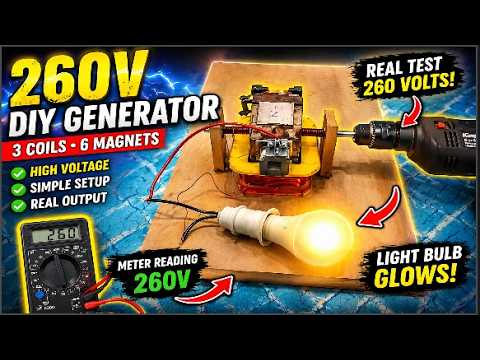
Building a DIY 260-Volt Generator Using Coils and Magnets
Introduction to Homemade Electricity Generation
The idea of generating electricity at home using simple materials like coils, copper wire, magnets, and wooden parts has fascinated inventors and DIY enthusiasts for decades. This project demonstrates how a homemade generator can produce up to 260 volts by combining electromagnetic induction with a carefully designed rotating magnetic system. The generator works by rotating a disc fitted with six magnets past three copper coils connected in series, creating a changing magnetic field that induces electrical current. Although the setup appears simple, the process requires precision, patience, and strict attention to safety because working with electricity and moving mechanical parts can be dangerous. The project begins with the preparation of a coil using a 4x6 mm bobbin and 0.813 mm copper wire. Around 180 turns of wire are wound tightly and evenly onto the bobbin to ensure efficient conductivity and stable performance. Proper winding is extremely important because uneven or loose turns can reduce the efficiency of the generator and create inconsistent voltage output. Once the main coil is completed, additional magnetic contactor coils are prepared to increase the total voltage generated by the system. These coils play an important role in improving the electromagnetic interaction between the rotating magnets and the conductive windings. The overall concept behind the generator is based on Faraday’s Law of Electromagnetic Induction, which states that a changing magnetic field can induce voltage in a conductor. By spinning the magnetic disc at increasing speed, the system produces stronger electromagnetic effects, resulting in higher voltage output. This DIY project not only provides insight into how generators work but also demonstrates the practical application of magnetic fields, copper coils, and rotational energy in producing usable electricity.
Designing and Constructing the Coil System
The construction of the coil system is one of the most important stages of the generator project because the quality of the coils directly affects the efficiency and voltage output of the machine. The process begins by selecting a suitable bobbin measuring approximately 4x6 mm, which acts as the base structure for winding the copper wire. Copper wire with a thickness of 0.813 mm is chosen because it provides a balance between electrical conductivity and durability. Using a winding machine, the wire is wrapped around the bobbin exactly 180 times. Maintaining neat, evenly spaced, and tightly packed turns is essential because random overlapping or loose winding can create resistance issues and reduce the generator’s performance. The winding machine helps ensure consistency in each layer and prevents damage to the wire during the process. After the winding is complete, the ends of the wire are secured firmly to prevent the coil from unwinding during operation. The coil becomes the heart of the generator because it is responsible for converting magnetic motion into electrical energy. Additional magnetic contactor coils are also prepared and positioned strategically around the rotating magnetic disc to enhance the electromagnetic effect. These coils are aligned carefully so that they interact efficiently with the magnetic field generated by the spinning magnets. Proper spacing between the coils and the rotating disc is necessary to prevent physical contact while still maintaining strong magnetic interaction. Once the coils are installed, all three coils are connected together in a series configuration. This means that the output of one coil feeds into the next, allowing the total voltage to increase significantly. Secure wiring and proper insulation are extremely important during this stage because poor electrical connections can result in voltage loss, overheating, or short circuits. The completed coil system represents a practical example of how electromagnetic principles can be transformed into a functioning electrical device capable of producing substantial voltage.
Building the Magnetic Rotation Mechanism
The magnetic rotation mechanism is another critical component of the homemade generator because it creates the changing magnetic field necessary for generating electricity. The construction process begins with the preparation of a strong wooden base plate that acts as the foundation for the entire setup. Stability is very important because vibrations or imbalance during operation can reduce efficiency and damage the generator. A circular wooden disc is then created to match the size of the coils and serve as the rotating magnet holder. Six evenly spaced slots are carefully cut into the wooden disc, ensuring balanced placement of the magnets. Precision in spacing is essential because uneven distribution can create wobbling and inconsistent magnetic interaction. Six powerful magnets are then inserted into the slots in an alternating north-south polarity arrangement. This alternating magnetic pattern is crucial because it produces a changing magnetic field as the disc rotates past the coils. Each magnet must be firmly secured to prevent movement during high-speed rotation, as loose magnets can create safety hazards and reduce performance. Once the magnets are installed, a strong metal shaft is attached to the center of the wooden disc to act as the rotational axis. Proper alignment of the shaft is extremely important because even slight imbalance can cause unstable rotation and excessive vibration. Two solid wooden support pieces are then positioned on either side of the coil assembly to hold the shaft above the coils. These supports are fixed securely using strong adhesive glue, creating a stable structure that allows smooth rotation of the magnetic disc. Careful alignment ensures that the disc spins freely without touching the coils. The magnetic rotation mechanism demonstrates how rotational mechanical energy can be converted into electromagnetic energy through the interaction of magnets and conductive coils. This setup forms the foundation of the generator’s operation and highlights the importance of precision engineering, balance, and magnetic polarity in the design of electrical generation systems.
Testing the Generator and Achieving High Voltage Output
Once the generator is fully assembled, the testing phase begins to evaluate its ability to produce electricity and deliver usable power. The first step involves connecting a voltmeter to the output terminals of the coil system. The voltmeter allows the builder to monitor the electrical output generated by the rotating magnetic disc. Initially, the shaft is rotated manually using a rope attached to the system. As the magnets begin passing the coils, the voltmeter displays an increasing voltage reading, confirming that electromagnetic induction is taking place. The faster the magnetic disc rotates, the stronger the changing magnetic field becomes, resulting in higher voltage generation. While manual spinning demonstrates the basic operation of the generator, it is limited in speed and consistency. To improve performance, an electric drill is connected directly to the shaft. The drill enables the magnetic disc to rotate at much higher and more stable speeds, significantly increasing the electromagnetic effect. As the drill spins the shaft rapidly, the voltmeter reading rises steadily and can reach up to 260 volts under proper conditions. This high voltage output demonstrates the effectiveness of the coil winding, magnetic arrangement, and series connection of the coils. However, generating voltage alone is not enough to prove practical functionality. To test real-world performance, a light bulb is connected to the output terminals of the generator. When the drill powers the rotating disc, the bulb begins to glow, confirming that the generator is capable of delivering usable electrical energy. The brightness of the bulb increases with rotation speed, showing the direct relationship between mechanical motion and electrical output. During testing, careful handling of the drill and continuous monitoring of the system are essential because high-speed rotation and high voltage can pose serious risks. Proper insulation, secure mounting, and stable operation are necessary to ensure safe performance. The successful testing of the generator demonstrates how a relatively simple combination of coils, magnets, and rotational force can produce significant electrical power through electromagnetic induction.
Safety Precautions and Educational Importance of the Project
Although the homemade 260-volt generator project is impressive and educational, it also highlights the importance of safety, technical knowledge, and responsible experimentation when working with electricity and mechanical systems. High voltage can cause severe electric shock, burns, equipment damage, or even life-threatening accidents if proper precautions are not followed. Rotating parts such as shafts, drills, and magnetic discs also create mechanical hazards that can lead to injury if components become loose or unstable during operation. For this reason, the project is intended primarily for educational and informational purposes rather than casual experimentation. Builders should always wear protective equipment, use insulated wiring, and double-check every connection before powering the system. The magnets must be securely mounted to prevent them from flying out during high-speed rotation, and the wooden support structure should be stable enough to handle vibrations and continuous operation. Anyone unfamiliar with electrical systems should consult a qualified professional before attempting such a project. Beyond safety concerns, the generator serves as an excellent demonstration of fundamental scientific concepts including electromagnetic induction, magnetic polarity, voltage generation, rotational energy conversion, and electrical circuit design. Students, hobbyists, and engineering enthusiasts can learn how mechanical energy transforms into electrical energy using relatively simple materials. The project also illustrates the importance of precision in coil winding, magnetic alignment, and structural balance when building functional electrical devices. While the generator is capable of producing high voltage, its main value lies in education, experimentation, and understanding the principles behind electrical power generation. By carefully studying and constructing the system, individuals can gain deeper insight into how commercial generators and power plants operate on similar electromagnetic principles. Ultimately, the project combines creativity, engineering, and science into a practical demonstration of electricity generation, encouraging innovation while emphasizing the need for caution, responsibility, and respect for electrical safety at all times.
Conclusion
Building a 260-volt generator using coils and magnets is an exciting demonstration of how electromagnetic induction works in practical applications. By carefully winding copper coils, aligning magnets in alternating polarity, and creating a stable rotating mechanism, it is possible to generate significant electrical voltage using a simple DIY setup. The project highlights the importance of precision, balance, and proper wiring in achieving efficient electricity generation.
This generator not only demonstrates the principles of magnetic fields and electrical induction but also provides valuable hands-on learning for students, hobbyists, and engineering enthusiasts. Every component, from the coil winding to the magnetic disc rotation, plays a crucial role in the overall performance of the system. Proper alignment and secure connections are essential for maintaining stable voltage output and ensuring reliable operation.
However, working with high voltage and rotating mechanical parts requires extreme caution. Safety should always be the top priority when performing electrical experiments. Using protective equipment, proper insulation, and secure mounting can help reduce the risk of electric shock, short circuits, or mechanical accidents. Anyone attempting this project should have a good understanding of electrical safety and seek professional guidance if necessary.
Overall, this DIY generator project is an excellent example of combining creativity, science, and engineering into a functional device. It encourages innovation, experimentation, and deeper understanding of how electricity can be generated through electromagnetic principles. With careful construction and responsible handling, this project serves as both an educational experience and a fascinating demonstration of homemade power generation.
Frequently Asked Questions (FAQs)
| No. | Frequently Asked Question | Answer |
|---|---|---|
| 1 | What is a DIY 260-volt generator? | A DIY 260-volt generator is a homemade device that generates electricity using coils, magnets, and rotational motion based on electromagnetic induction principles. |
| 2 | How does the generator produce electricity? | The generator works by rotating magnets past copper coils, which creates a changing magnetic field that induces electrical voltage in the coils. |
| 3 | What materials are required for this project? | The main materials include copper wire, magnets, wooden boards, a metal shaft, adhesive glue, coils, a voltmeter, and an electric drill for rotation. |
| 4 | Why are the magnets arranged in alternating polarity? | Alternating north and south polarity creates a stronger and more consistent magnetic field, improving voltage generation efficiency. |
| 5 | Why are the coils connected in series? | Connecting the coils in series increases the total voltage output by combining the voltage generated by each individual coil. |
| 6 | Can this generator really produce 260 volts? | Yes, with proper coil winding, strong magnets, and high rotational speed, the setup can generate up to 260 volts during testing. |
| 7 | Is this project safe for beginners? | No, this project is not recommended for beginners because it involves high voltage and rotating mechanical parts that can be dangerous without proper knowledge and safety precautions. |
| 8 | What is the purpose of using an electric drill? | The electric drill spins the shaft at high and consistent speeds, which increases the magnetic interaction and boosts voltage output. |
| 9 | Can the generator power real electrical devices? | The generator can power small devices like light bulbs for demonstration purposes, depending on the voltage and current output. |
| 10 | What safety precautions should be followed? | Always wear protective gear, use insulated wiring, secure all components firmly, avoid touching live wires, and consult a qualified professional if unsure about electrical work. |

Discussion
No comments yet. Be the first to join the conversation!