
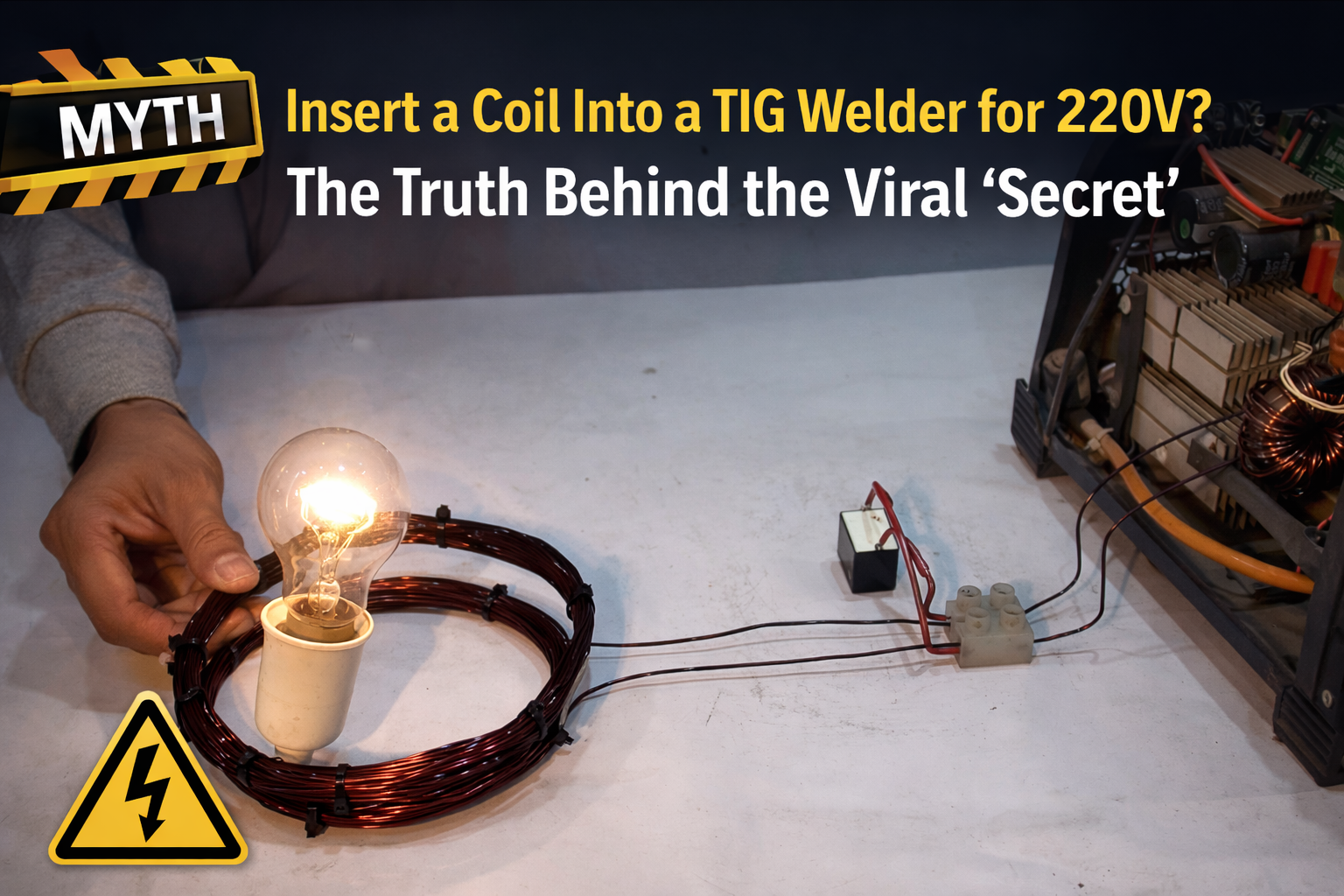
Billions of People Don’t Know This “Secret”!
The Truth About Inserting a Coil into TIG Welder to Get 220V

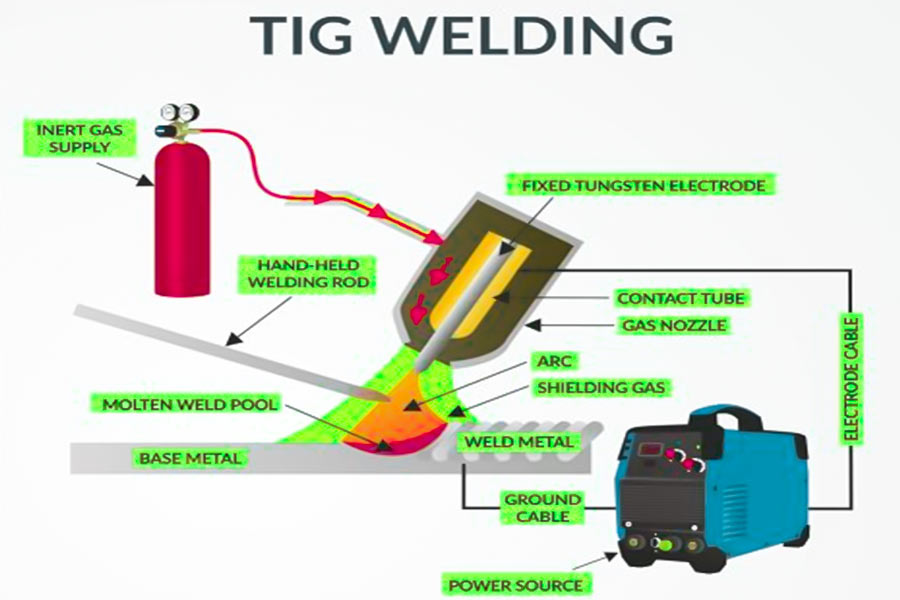

Every few months, the internet explodes with a shocking claim.
“Insert a simple coil into a TIG welding machine and you can magically Tig Welder get 220V electricity!”
Videos with millions of views promise free power, hidden features, and a secret the manufacturers don’t want you to know. The comments are full of amazement, disbelief, and people begging for diagrams.
But here’s the uncomfortable truth:
👉 This “secret” is not only misunderstood — it’s extremely dangerous.
Let’s break down what’s really going on, why this myth refuses to die, and what actually happens inside a TIG Welder to Get 220V when people attempt these hacks.
Why This Claim Sounds So Convincing
TIG welding machines already deal with serious electrical power. That alone makes the idea believable.
Most people know that:
TIG welders use high voltage to start an arc
They contain coils, transformers, and inverters
Electricity can be “stepped up” or “stepped down” using coils
So the logic goes like this:
“If I add or modify a coil, I can tap into hidden 220V power.”
On the surface, it sounds like clever electrical engineering.
In reality, it’s a misunderstanding of how welding machines work — and a risky one.
What’s Actually Inside a TIG Welding Machine
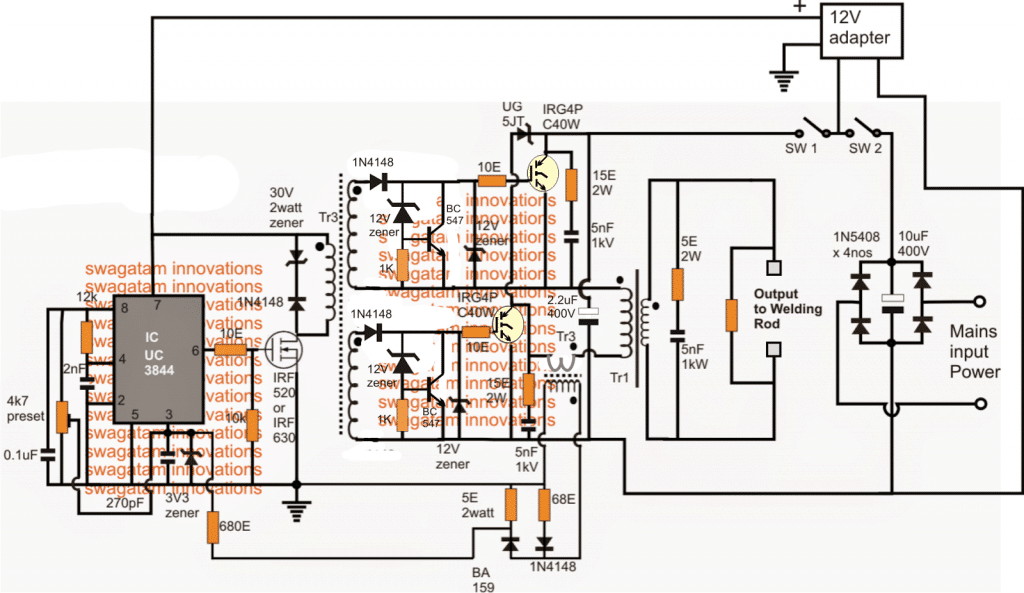

Modern TIG welders are not simple transformers.
Inside, you’ll typically find:
Rectifiers converting AC to DC
Inverter circuits switching at high frequency
Step-down transformers designed for high current, low voltage
High-frequency start circuits producing momentary high voltage
Here’s the key point most viral videos ignore:
⚠️ The high voltage inside a TIG welder is NOT usable household power.
It’s:
Unstable
High frequency
Low current in some stages
Extremely dangerous if misused
The Coil Myth: Where It Goes Wrong
Yes, coils can transform voltage — when used correctly in designed systems.
But inserting a random coil into a TIG welder does not create a stable 220V AC output.
Instead, it can cause:
Uncontrolled voltage spikes
Internal short circuits
Inverter failure
Arc flash
Fire
Severe electric shock
Many videos cut before showing the aftermath — blown machines, destroyed circuit boards, or worse.
Why Some People Think It “Works”
This is where the confusion really starts.
When people attach coils, probes, or meters, they may briefly see:
High voltage readings on a multimeter
Flickering bulbs
Sparks jumping unexpectedly
But this is not usable power.
It’s similar to touching an ignition coil in a car — impressive voltage, almost zero practical output, and very dangerous.
Meters can also give false or misleading readings when exposed to high-frequency inverter noise.
The Hidden Danger Nobody Talks About


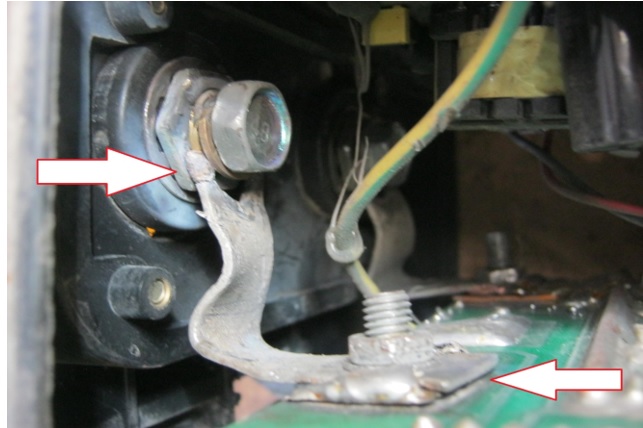
The real danger isn’t just shock.
It’s arc flash and stored energy discharge.
TIG welders contain:
Large capacitors
High-energy switching components
Circuits that remain charged even when unplugged
One wrong contact can:
Vaporize metal
Cause deep burns
Stop your heart
This isn’t theory — it’s documented electrical safety risk.
Why Manufacturers Don’t Include “Hidden TIG Welder to Get 220V Outputs”
Some people claim:
“If it’s possible, why don’t manufacturers include it?”
Simple answer:
Because TIG welders are not designed to be generators.
Adding stable AC output would require:
Isolation transformers
Voltage regulation
Ground fault protection
Certification and safety compliance
Without that, it’s illegal, unsafe, and a liability nightmare.
The Psychology Behind Viral “Secret Power” Videos
These videos succeed because they combine:
Mystery (“They don’t want you to know this”)
Authority (tools + sparks = credibility)
Simplicity (one coil, one trick)
Hope (free electricity)
But engineering doesn’t work on shortcuts.
Physics always collects the bill.
Safe and Legitimate Ways to Get 220V Power
If your goal is portable or alternative power, there are real options:
Inverter generators
Proper DC-to-AC inverters
Engine-driven welders with AC output
Certified solar inverter systems
These systems are designed to:
Regulate voltage
Protect users
Deliver stable power
No myths required.
Final Verdict: Secret or Serious Risk?
Let’s be clear.
❌ There is no hidden, safe, usable 220V output unlocked by inserting a coil into a TIG welder.
❌ Viral videos oversimplify or misrepresent electrical behavior.
❌ Attempting this can permanently damage equipment — or you.
✔ Understanding the real science is far more powerful than chasing fake secrets.
The true “secret” isn’t hidden electricity.
It’s knowing when a hack crosses into hazard.
Frequently Asked Questions (FAQ)
| # | Question | Answer |
|---|---|---|
| 1 | Can a TIG welder really generate 220V electricity? | No. TIG welders are not designed to provide stable, usable 220V AC output. Any voltage observed is incidental and unsafe. |
| 2 | Why do some videos show a bulb lighting up from a TIG welder? | The bulb may glow due to high-frequency or induced voltage, not because the welder is producing proper 220V household power. |
| 3 | Is inserting a coil into a TIG welder safe? | No. Modifying welding equipment can expose users to lethal voltages, arc flash, and fire hazards. |
| 4 | What kind of voltage does a TIG welder actually produce? | TIG welders produce controlled welding voltage and momentary high voltage for arc starting, not regulated AC power. |
| 5 | Are these TIG welder “power hacks” real? | They are misleading. They misuse electrical principles and often rely on unsafe or misunderstood effects. |
| 6 | Why do multimeters sometimes show high voltage readings? | High-frequency inverter noise can confuse meters and display misleading voltage values. |
| 7 | Can this trick damage the TIG welding machine? | Yes. It can destroy inverter boards, transformers, capacitors, and void warranties. |
| 8 | Is it illegal to modify a TIG welder this way? | In many regions, unsafe electrical modifications violate electrical and workplace safety regulations. |
| 9 | Why don’t manufacturers include a 220V output if it’s possible? | Because welders are not generators. Safe AC output requires isolation, regulation, and certification. |
| 10 | Does this method provide usable electrical current? | No. Even if voltage appears high, usable current is unstable or insufficient. |
| 11 | Is this the same as how transformers work? | No. Transformers are carefully engineered systems, not improvised coils added to active electronics. |
| 12 | Can this cause electric shock even if the welder is unplugged? | Yes. Capacitors inside welders can store dangerous energy long after power is removed. |
| 13 | What is the biggest risk in trying this hack? | Arc flash, severe burns, heart arrhythmia, fire, or fatal electric shock. |
| 14 | Why do these videos go viral online? | They combine mystery, simple visuals, and the promise of “free power,” which attracts attention. |
| 15 | Is there any legitimate way to get power from welding equipment? | Only from machines specifically designed with certified auxiliary power outputs. |
| 16 | Can this trick power tools or appliances? | No. It cannot provide stable frequency, voltage, or current required for appliances. |
| 17 | Are beginners more at risk trying this? | Yes. Lack of electrical safety knowledge greatly increases the danger. |
| 18 | What should I do if I want portable 220V power? | Use a certified inverter, generator, or solar power system designed for that purpose. |
| 19 | Does this trick work better on older welders? | No. Older welders may be even more dangerous due to less protection circuitry. |
| 20 | What is the real “secret” behind this myth? | Misunderstanding electrical behavior and confusing voltage presence with usable power. |